Kathrine Bright: Strong Enough to Finish Last
Kathrine Bright, a Main Line trainer, finished a 100-mile race dead last. She says it's one of the proudest moments of her life.
After a sign in a rainy parking lot pulled her out of college coaching, Kathrine Bright built a space where postpartum moms, perimenopausal women, and burned-out former athletes could learn to trust their bodies again.
Kathrine doesn’t remember feeling burned out the day she saw the sign. She remembers feeling tired. It was the kind of tiredness that comes from being exactly where you always dreamed of being and still knowing something has to give. She was coaching NCAA athletes, working 14-hour days, six and seven days a week, and coming home to a toddler and a supportive partner, all the things she thought she wanted.
Then, on that gray, rainy afternoon, she drove past a sign for a physical therapy practice looking for an independent contractor. “It was like that little glimmer of sunshine,” she said. She applied. Twelve years, one high-risk pregnancy, a diagnosis of postpartum PTSD, and two extreme distance races later, she is the owner and founder of KatFit. She built her Main Line-based training practice around a simple, hard-won idea: women deserve to be met where they actually are, not where the fitness industry insists they should be.
Kathrine Bright is a 2026 Main Line Parent Women of Influence Award Winner
Main Line Parent’s Women of Influence Awards celebrate exceptional women making significant impacts in our community. Kathrine was nominated by her cousin, Julie Deem, and selected based on her achievements and dedication to creating positive change. Each Women of Influence Award Winner has committed to support Family Focus Media’s core values. Together, we are fostering a sense of belonging and empowerment for all families. All backgrounds, races, genders, and sexual orientations are welcome and safe with us.
A Sign in the Rain
Kathrine spent years coaching college athletes, and she loved the work. But loving it and being able to sustain it were two different things. “I was in a position I always dreamed of being in,” she said, “but I was exhausted, and I just knew I couldn’t keep this on.”
There was no dramatic breaking point for Kathrine, no single bad day. She just experienced an accumulating tiredness that told her something had to change before her health did. When she spotted the sign for the physical therapy practice, she didn’t have a plan. She just knew it might be another way forward, one that didn’t cost her herself. She applied on a whim. It became the rest of her career.
Meeting Clients Where They Actually Are
What Kathrine noticed almost immediately in conventional personal training frustrated her. Clients would walk in fired up. Often these clients were women building families, or men and women hitting their 40s and suddenly facing a cascade of new medications and diagnoses. But then they would vanish for weeks at a time. Not because they didn’t want to show up, but because life didn’t stop for a workout schedule.
“I needed to reach them on their terms,” she said, drawing a direct line back to her years coaching college athletes, where success meant understanding a student’s stress and schedule outside of practice, not just what happened on the field. The fitness industry, by contrast, ran on willpower and all-or-nothing thinking.
Kathrine started corresponding with clients through Google Sheets and in the early, internet era, through Skype. She trained her clients in person and online in what’s now called a hybrid model, years before it became an industry trend. The shift changed everything. “Clients found success,” she said. “That guilt and shame lessened, and their results started to come more rapidly. And they stuck with me longer.”
Building a Business From a Hospital Bed
Six months after Kathrine launched KatFit, she learned she was facing a high-risk pregnancy and was placed on bed rest until her son was born. “I had just built a lot of momentum,” she said. “I wondered how this was going to be possible.”
The hybrid model she’d built out of necessity for her clients became the thing that saved her business. She coached from her couch and, eventually, from a hospital bed. She relied on a master’s degree in education and coaching principles, and a formative class years earlier at the Perkins School for the Blind, where she’d learned to teach movement through language alone.
What she didn’t expect was what she’d learn from the nurses and doctors around her. Curious about her work, they peppered her with questions about postpartum exercise and cardio. In the process, they revealed their own frustration that women were routinely cleared to return to activity at six weeks postpartum with no real course of treatment, despite known issues like diastasis recti and pelvic floor dysfunction.
“There was no protocol, the way there is for an ACL repair,” Kathrine said. She began digging into the physiology of pregnancy and postpartum recovery in earnest, and rebranded her entire business from her hospital bed. She moved away from a “bounce back” mentality and toward a model built on understanding what a woman’s body had actually been through, and how to rehabilitate it.
Learning to Trust Her Body Again
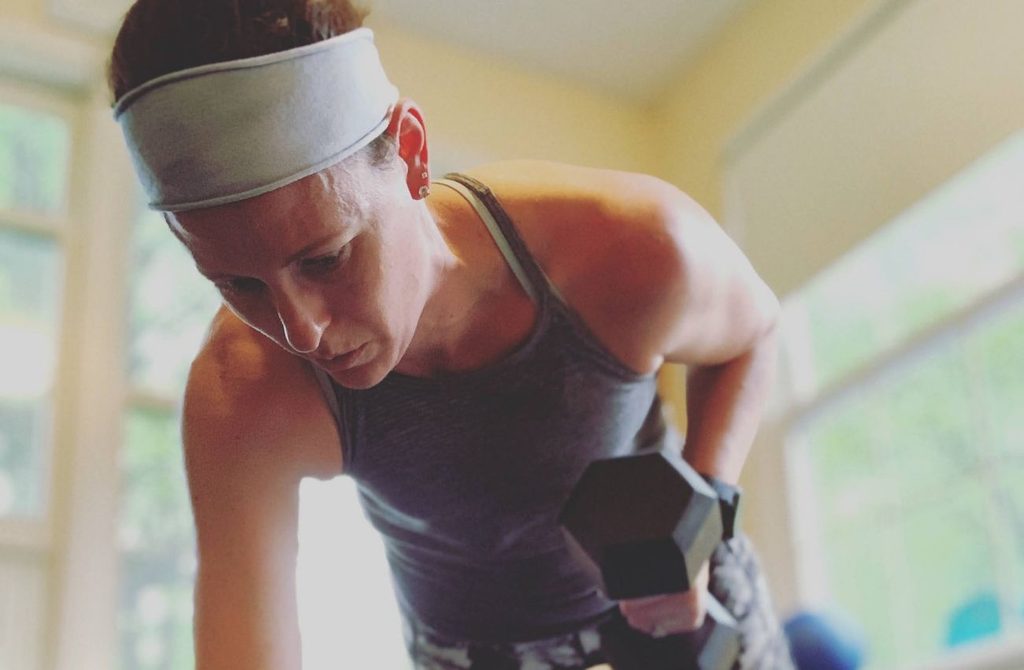
The period that followed is one Kathrine describes carefully. She had a premature baby in the NICU, a toddler at home, a business to keep afloat, and a diagnosis of postpartum PTSD. “I don’t want to say it was a dark time,” she said. “It was just a very interesting time.” A former college athlete used to commanding her body to perform, she found herself for the first time genuinely afraid of it. She was afraid to run, afraid to pick up a weight.
Relearning that relationship, slowly and without a map, became the foundation of how she now coaches. She says there is a story for nearly every client who comes through her door, whether they were a college athlete or have never set foot in a gym. They experience some moment or some voice that convinced them what their body could or couldn’t do. Kathrine’s own unraveling and rebuilding gave her, “a really good, empathetic understanding of where clients are coming from.”
Dead Last, and Proud of It
Ask Kathrine about failure and she’ll take you back to high jump, her main event as a college athlete, where every single competitor, winner included, finishes on a miss. “The whole event is about failure,” she said. “The whole event is about stepping outside your comfort zone.”
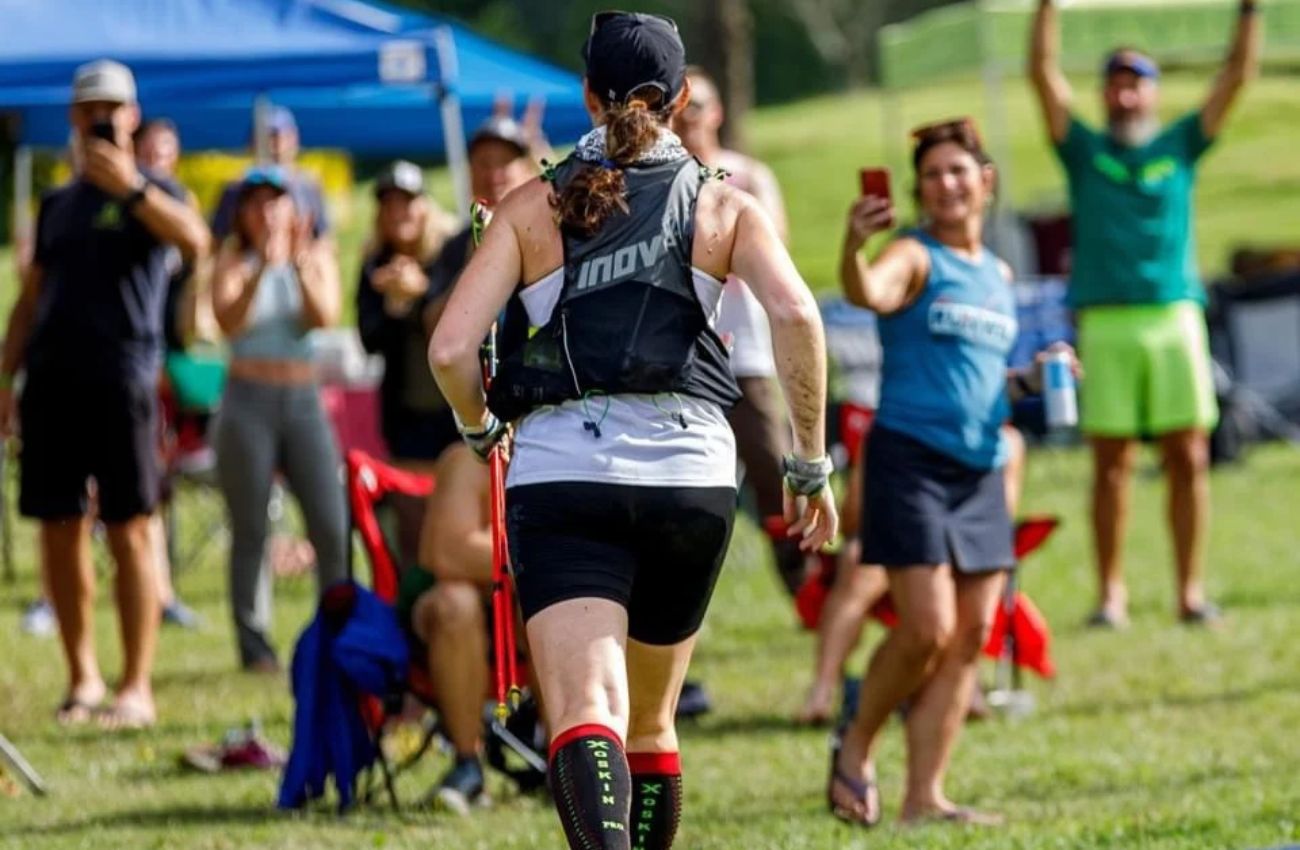
That mindset carried her, years later, to the starting line of the Eastern States 100, widely considered one of the toughest 100-mile races in the country, through the rugged shale and relentless climbs of Pennsylvania’s Allegheny Plateau. She battled blistered feet down to raw flesh, lost hours of her cutoff buffer overnight after going off course, and came within minutes of being pulled from the race. She finished. Dead last.
“It wasn’t a checkmark of, well, if I can do this, then I can do this,” she said. “It was: let me step so far outside of my comfort zone.” Her younger son, the same baby she’d carried through bed rest years earlier, met her at the starting line with a hug. He told her, simply, that she was running 100 miles that day. “He believed in me,” Kathrine said. “Sometimes when we don’t believe in ourselves, we have to borrow belief from others that believe in us.”
Three years later, drawing on that same momentum, Kathrine set the women’s fastest known time on the Pennsylvania section of the Appalachian Trail. This section spans 230 miles and requires powering through roughly 31,000 feet of elevation change. Kathrine completed it over Memorial Day weekend this year.
From Lost to Trusting Herself Again
Her philosophy that showing up imperfectly still counts as showing up shapes how Kathrine works with clients. She points to one who came to her in the thick of early motherhood, postpartum with her second baby, physically depleted and disconnected from her own body. “I don’t know where to begin,” the client told her. “I used to feel strong. Now I just feel lost.” They didn’t start with hard workouts. They started with breathing and grounding, rebuilding slowly.
The client progressed from a pain-free squat, to experiencing a core that finally engaged, to waking up to a morning without back pain. Months later, the client texted Kathrine after finishing a two-mile run with no pain. She’d cried happy tears the whole way. “It wasn’t about the distance,” Kathrine said. “It was what that run represented.”
Kathrine is candid with all her clients that she sometimes misses her own workouts and leaves miles unrun. “I honored where I was. I did the best I could, and that’s it. That’s all I need for today.” It’s a deliberate departure from an industry that tells people to go home if they can’t show up a certain number of times, a certain way. “That’s not how elite athletes get on a podium,” she said.
Reaching Women the Industry Overlooks
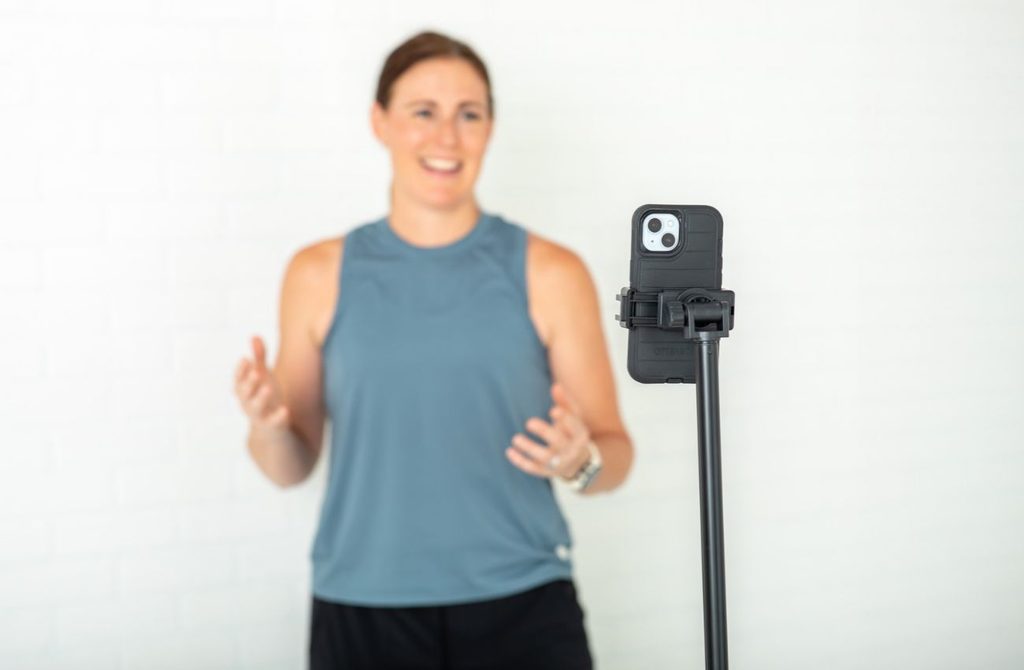
In the past several years, Kathrine has expanded her focus to include women navigating perimenopause and menopause. This shift she says grew out of the same gap she saw in postpartum care: oversimplified advice, one-size-fits-all workouts, and a lot of noise about supplements with little real education behind it. She’s also launched two podcasts. One podcast is for the public, covering training myths, mindset, and nutrition with guest experts. She also hosts a members-only show for clients that functions like a weekly coach-up, addressing whatever theme is showing up most in her conversations that week.
Podcasting wasn’t a natural fit at first. “I’m horrible at social media,” she said with a laugh. She leaned on her cousin, a podcast editor and producer, to get started. She also opened her earliest episodes with a disclaimer that the sound quality might be rough while she learned. “The information here is going to be quality,” she told listeners. “If you bear with me while I learn this, we’re going to go with it.”
Giving Back Close to Home
Kathrine is active in trail-running communities that help women get more comfortable venturing outdoors, and she supports perinatal mental health efforts, an area she describes as “huge” and often overlooked. She regularly invites colleagues and nonprofit partners onto her podcast to help amplify their work and get their names in front of a wider audience.
Bright also volunteers to mentor other fitness professionals through compassion, science, and connection, especially women who want to do this work differently. All of this is part of Kathrine’s broader commitment to platforming women in the industry who are genuinely there to help.
Advice for the Woman in the Middle of a Setback
Kathrine’s advice to women facing their own hard season is rooted in what she learned 80 miles into a race, and in the thick of postpartum recovery, in equal measure. “You don’t have to be fearless, you just have to keep going.”
Healing and progress, she says, are never linear, and that’s not a problem to fix. It’s simply the terrain.
“You can feel like quitting and keep going. You can lose your way and still find your purpose. You can finish dead last and still walk away forever changed.”
– Kathrine Bright
What’s Next
Kathrine is still recovering from her Appalachian Trail record and isn’t sure yet what the next big physical challenge will be. Professionally, she’s focused on strengthening her podcast and reaching more women who may never set foot in her studio. She’s continuing to bridge the gaps she sees for women in perimenopause and menopause. She’s also turning over an idea she’s circled for years: launching her own nonprofit. “I’m like, oh my gosh, can I handle more?” she said. Knowing Kathrine’s track record, the answer seems likely to be yes.
Follow KatFit at kat.fit and on Instagram @katfitstrength. Learn more about Kathrine’s podcast and connect with Kathrine Bright on LinkedIn.
Help us honor Kathrine by sharing what her contributions mean to you in the comments below.