What a Playground Can Tell You About Westtown School
Westtown School’s new Lower School playscape in West Chester was designed with students, teachers, and play researchers at Studio Ludo
On a crisp fall morning in West Chester, Pennsylvania, Westtown School’s Lower School playscape buzzes with energy. Children soar on swings, invent worlds and magic potions in playhouses, dash up boulders, and pretend under the canopy of a multi-level treehouse—sometimes with friends, sometimes by themselves.
What may look like pure fun was planned with care. At Westtown School the playscape is a living classroom, designed with community discernment, informed by research, and rooted in Quaker practice. Guided by an inclusive design process with Studio Ludo, the Philadelphia-based nonprofit leader in play research and design, Westtown has brought to life a playscape that is innovative, natural, and deeply their own.
How a Quaker School Designed Its Playground by Listening First
The journey began not with blueprints, but with queries: What do we believe play should be? How can our campus landscape support children’s physical, social, and emotional growth? What memories do we hope today’s students will carry into adulthood?
To answer, Westtown School convened a committee led by Lower School Principal Karyn Payton and Assistant Principal Nicole Vonnahme. Faculty, facilities staff, and administrators joined them at the table. In true Quaker fashion, the process unfolded through meetings marked by patience, listening, and the search for unity.
Studio Ludo’s approach meshed perfectly with Westtown’s Quaker ethos. Known for its research on play behavior, Studio Ludo’s team came prepared to help Westtown not only design a space, but also to reveal the unique “play culture” at Westtown.
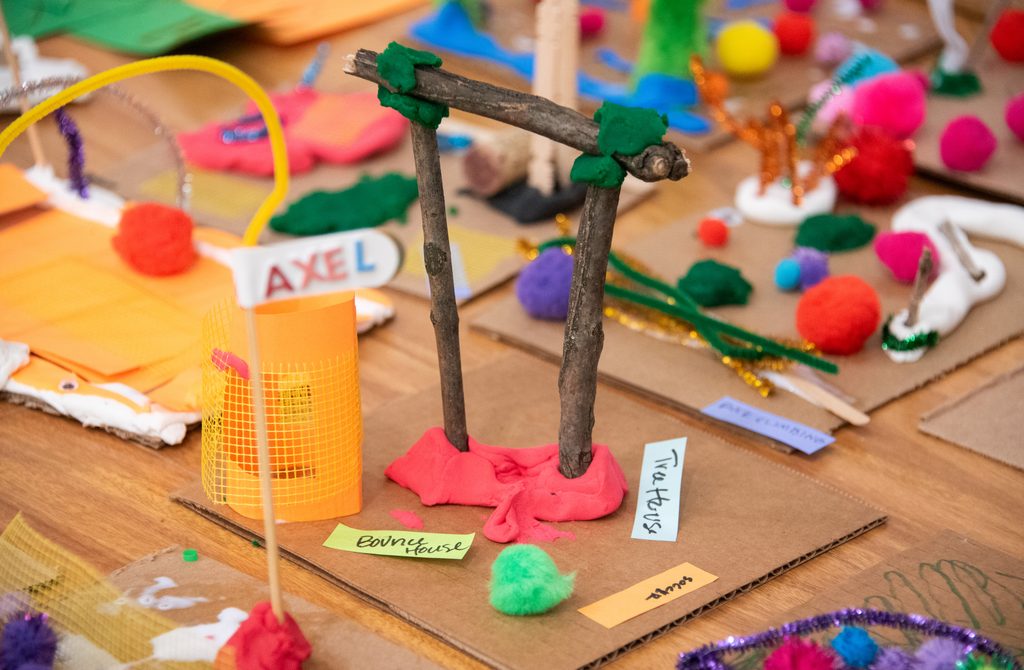
First, faculty reflected on childhood play memories: climbing trees, building forts in the woods, playing capture the flag, lying in the grass. Lower School students were then given open-ended prompts about their ideal playground: Do you like to be up high or down low? Do you like to move fast? Do you like to be in cozy spaces or in wide open views? Each student drew, wrote stories, and built 3D cardboard models to show the kinds of experiences they wanted.
From these voices, themes emerged: play at Westtown should be inclusive, collaborative, creative, open-ended, and student-centered. It should not be exclusive, violent, or overly predetermined. These guiding principles shaped every decision.
Why Play Matters in Lower School
The science of play is clear: play is not separate from learning; it is learning. In its clinical report The Power of Play, the American Academy of Pediatrics describes how developmentally appropriate play helps young children build language, social skills, and self-regulation. “Play is how we learn about life. It is a safe space where we try, fail, and try again, growing into our best selves. A childhood with plenty of opportunities for free play supports long-term emotional stability, physical wellness, and health and happiness throughout life,” says Meghan Talarowski, founder and executive director of Studio Ludo. For children, play develops strong brains, healthy bodies, resilience, and social skills.
In early childhood, play builds connections with caregivers. In lower school, it helps children test rules and navigate friendships. Later in childhood, it fosters independence, healthy risk-taking, and confidence.
That is why Westtown’s playscape includes opportunities for both thrilling “woo” moments — like the rush of a Viking swing — and quiet nooks for solo regulation. It balances risk and safety, movement and stillness, social energy and solitude.
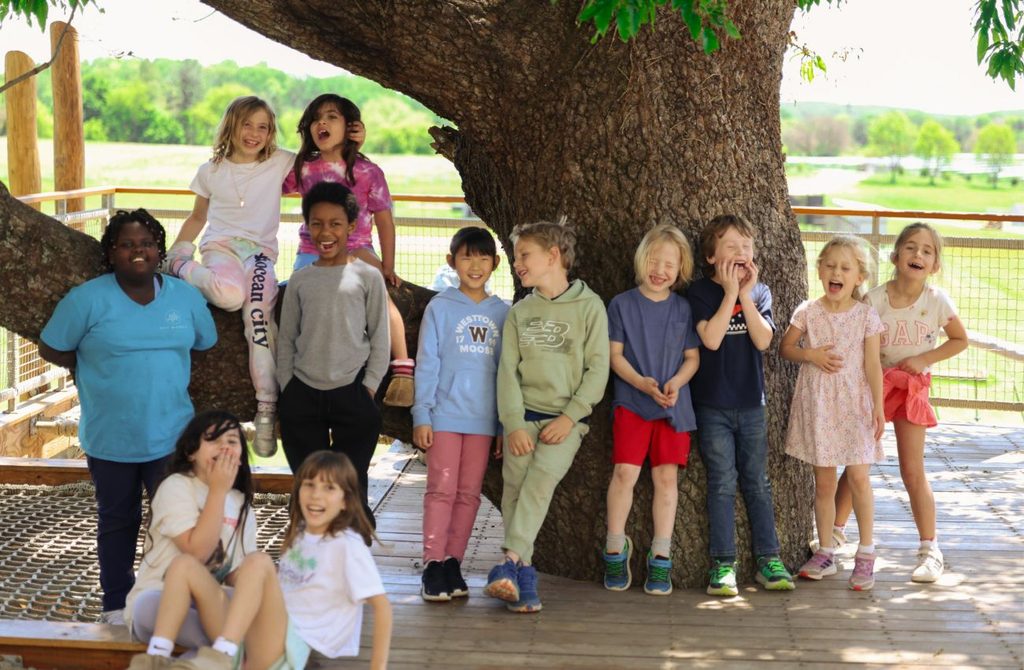
Nature as a Teacher on a 600-Acre West Chester Campus
One of the defining features of the new playscape is how seamlessly it integrates with Westtown School’s natural environment. Rather than covering ground with asphalt, the design celebrates trees, rain, plants, and soil as central to play. “Playing in nature provides rich sensory experiences that light up our brains, supporting all aspects of development, from mental to physical to social-emotional. Being outdoors calms our stress response, lowers cortisol, and makes us feel happier and more connected,” says Talarowski.
- Rain gardens: Instead of treating a rainy day as an obstacle, rain is captured in planted basins with stepping stones, turning storms into new adventures. Water never lingers for more than 24 hours, but while it’s there, children can leap across stumps, splash, and watch habitats shift.
- Native perennials and trees: Every plant has a purpose—flowering, fruiting, or releasing fragrance in the seasons when children are most present. Purple beautyberries, aromatic leaves, and fall foliage create a sensory palette. Students learn to care for “baby” plants, notice seasonal cycles, and reflect on how resources are shared in nature.
- Mini farm adjacency: The playscape flows into the Lower School’s existing mini farm, strengthening ties between play, science, and food education. Children move easily from tending plants to inventing games in the grass, or from journaling on the tree deck to watching pollinators at work.
- Shade and habitat: Carefully chosen fast-growing and long-lived trees now offer shade and welcome birds and insects. The Westtown playscape already attracts small creatures—frogs, birds, insects—that make their homes alongside the children.
As seen on Westtown School’s Blog, A Well-Lit Path:

A Life in the Field with Ryan Black
That connection to the land keeps growing as Westtown students get older. Upper School environmental science teacher Ryan Black takes students into the marsh, woods, and streams on campus, where the landscape becomes their learning lab and outdoor classroom. Read A Life in the Field: Ryan Black.
Playground Features Shaped by Student Imagination
The final playscape reflects myriad student dreams, translated into features that grow with them:
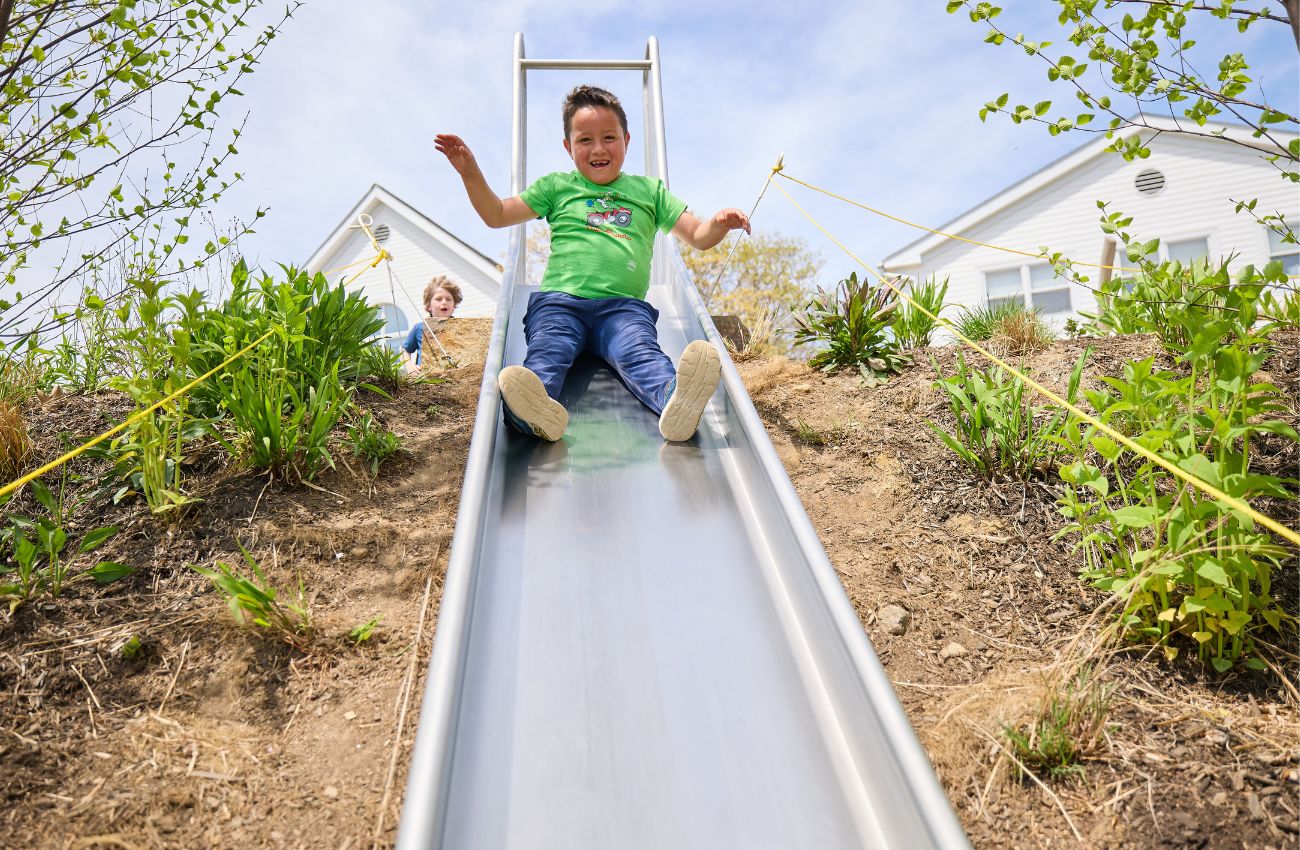
- Hill-built slide: Children loop endlessly between climbing up and sliding down, testing strength and stamina.
- Viking swing and basket swings: Social and thrilling, these swings let friends soar together while taking in wide views.
- Two parkour structures: Monkey bars and climbing frames give students places to push their bodies, take incremental risks, and celebrate new milestones.
- Tree deck: A custom robinia-wood structure integrated with an existing tree allows students to experience canopy-level wonder while protecting the tree’s health.
- Playhouses and stump bowls: Perfect for imaginative games, storytelling, or “rituals and potions,” as one child put it.
- Sand, boulders, hammocks, and hideouts: Materials that invite children to manipulate, construct, and retreat.
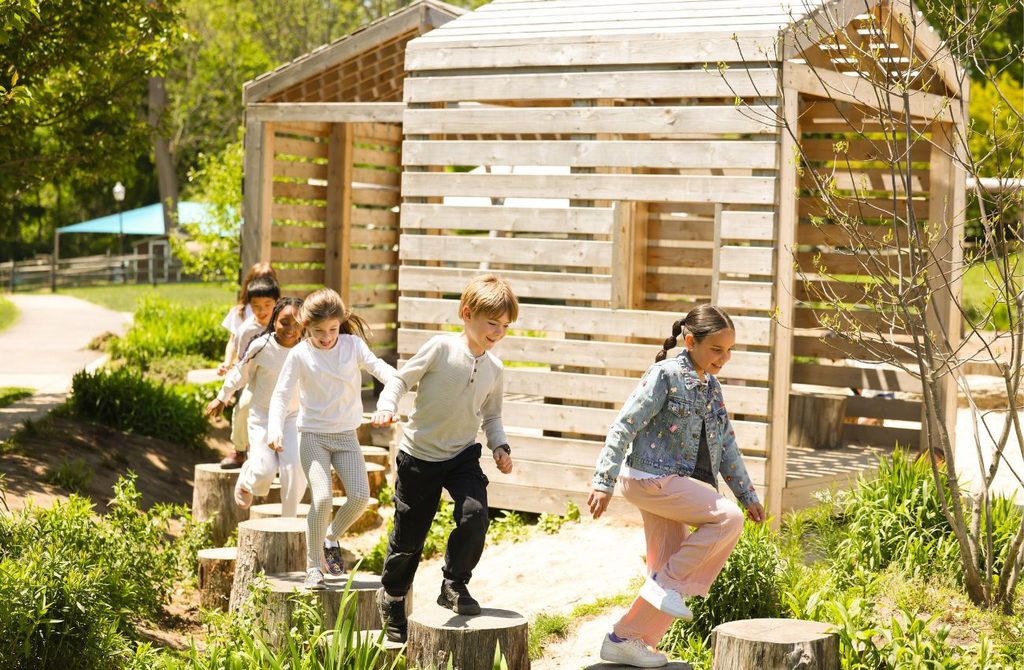
Equally important are the open fields and grassy areas that invite unstructured play on Westtown’s 600-acre campus—soccer goals that can be moved in and out, or spaces where children can sprawl with a book or share lunch under the sun.
As seen on Westtown School’s Blog, A Well-Lit Path:
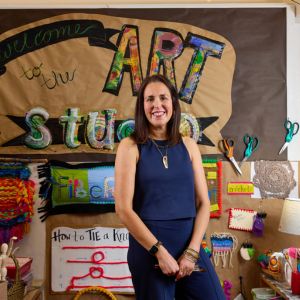
The Artists in the Room: Jane Chesson
The children who imagined playhouses and climbing spaces for Westtown’s playscape bring that same inventiveness into Jane Chesson’s art studio. Here, even the youngest artists experiment with materials, work through ideas, and learn from one another. “They learn to not only see themselves as artists,” she says. “They see each other as artists.” Read The Artists in the Room: Jane Chesson.
Community Ownership and Stewardship
Because faculty and students shaped the earliest ideas, there is a strong sense of ownership in the finished design. Lower School teachers were the first to play on a chilly February morning—testing equipment, experiencing the “woo” themselves, and preparing to model safe, joyful engagement.
Students formally said goodbye to their old playground before construction began and then welcomed the new one, an act of closure and beginning. This process also fosters stewardship. The children who helped imagine the space now care for it, and they carry pride in knowing their voices play an important role at their school. As one parent noted, “When they have input, it shows ownership. They care for it more, because they appreciate it as theirs.”
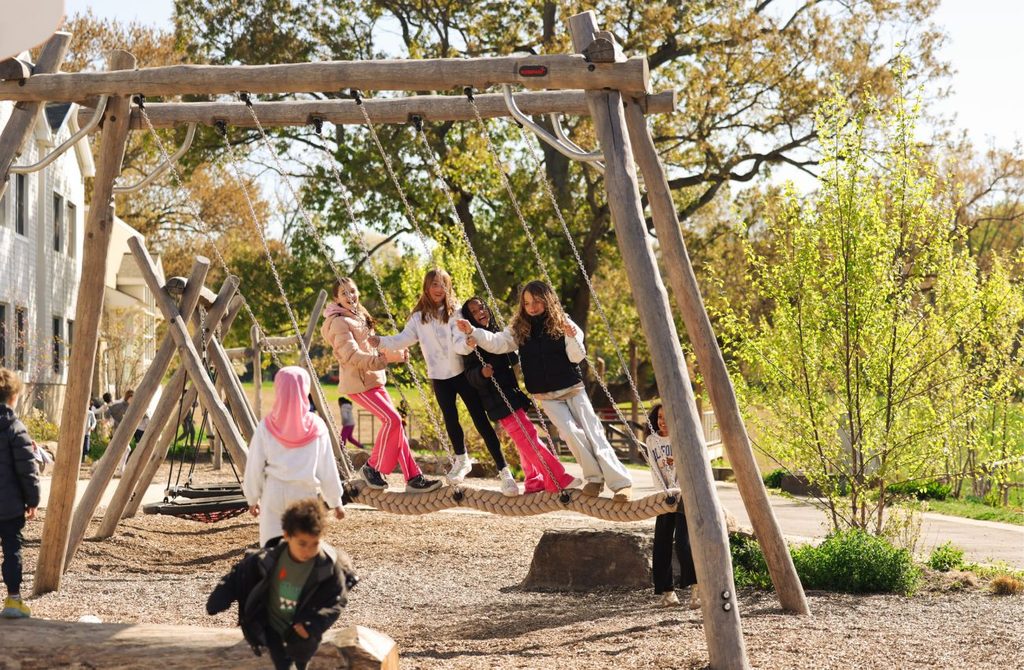
As Lower School Principal Karyn Payton reflects, “The Westtown Lower School playscape is a reflection of our mission—an extension of our classrooms and a tangible expression of the values we hold for our youngest Westonians. We are proud of the deeply intentional approach we took in designing and building this space. The process itself mirrored how we approach teaching and learning in the Lower School and highlights the central role of community in everything we do. Most importantly, it is a place where our students can explore, imagine, and grow together every day.”
There’s Nothing Like Experiencing Westtown in Action!
A Quaker school serving students in pre-K through grade 12, Westtown offers day and boarding programs on their 600-acre campus in West Chester, Pennsylvania. Students are known well, encouraged to ask big questions, and trusted to take an active role in their learning and community.
Families can see the playscape for themselves on a Lower School tour, or explore Middle and Upper School through visits tailored to their child’s next chapter. Tours offer a chance to see teaching and learning in action, learn about the school’s programs, and get a feel for the community. Arrange a visit to Westtown here and enjoy a sneak preview of the campus from home with the school’s virtual tour.
Photos courtesy of Westtown School, as seen in the Fall Education Guide.
This story supports the Main Line Parent Community. Collaborate with us.