A Three-Year Learning Journey That Supports Every Child at Montessori Children’s House of Valley Forge
Discover how the three-year cycle in Montessori education transforms early learners into confident kindergarten leaders who are academically prepared, socially skilled, and established life-long learners.
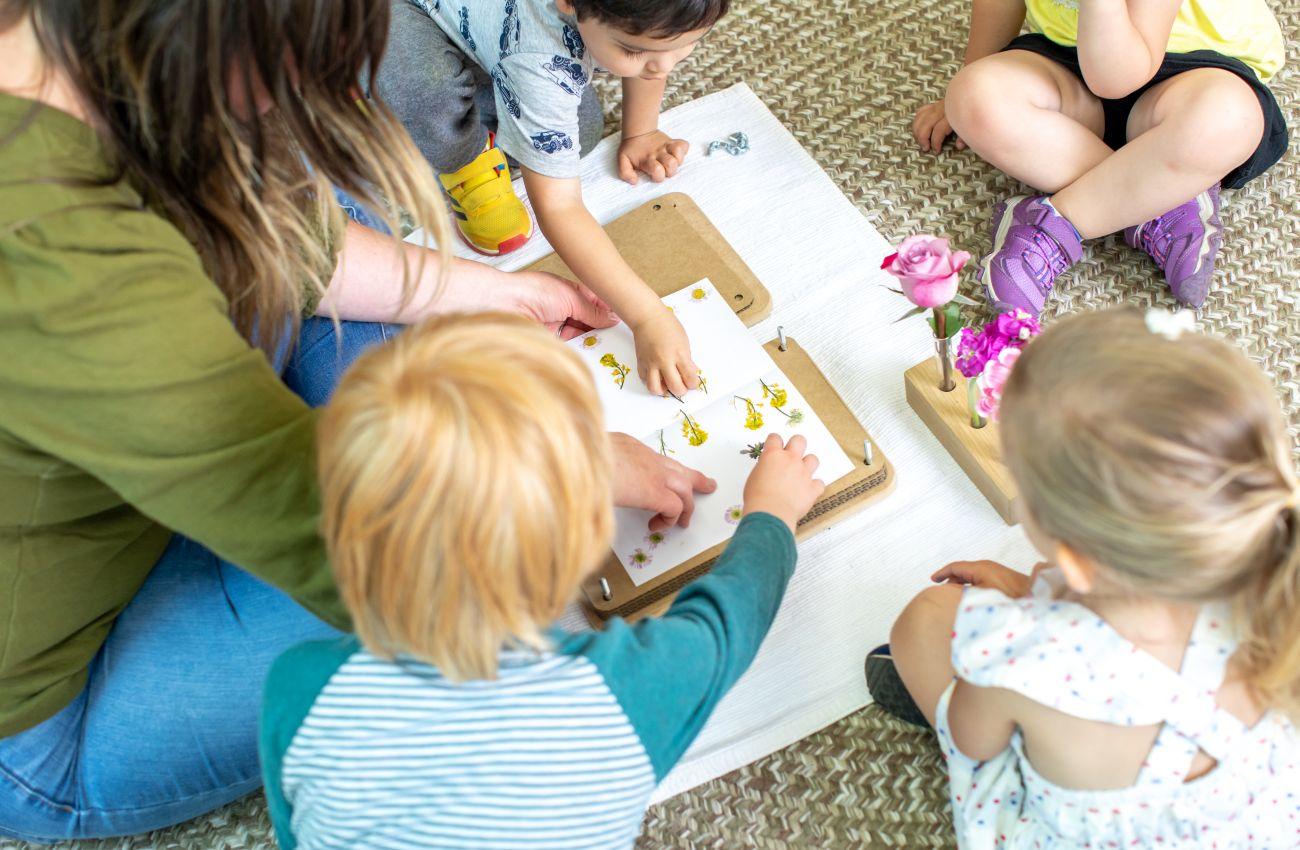
Is your child really ready for kindergarten? At Montessori Children’s House of Valley Forge (MCHVF), families discover kindergarten isn’t a leap into the unknown, but the capstone year of a carefully designed three-year learning journey. This approach centers on individualized education, allowing each student to progress at their own pace while receiving the guidance, challenge, and enrichment they need to grow and thrive.
Nestled in beautiful Valley Forge National Historical Park, Montessori Children’s House serves Main Line families through an educational approach that builds confidence, independence, and a genuine love of learning. The secret? The Montessori three-year cycle, a foundational structure that transforms how children experience their early education years.
Understanding the Three-Year Cycle
Unlike traditional preschool programs where children move from classroom to classroom each year, the Montessori three-year cycle keeps children in the same carefully prepared environment with the same teacher from ages 3 to 6. This continuity allows children to progress through three distinct developmental stages—from explorer to experimenter to expert—building skills systematically while developing leadership and confidence along the way.
Here’s how each year shapes your child’s growth.
Year One: Explorers Discover Their Potential
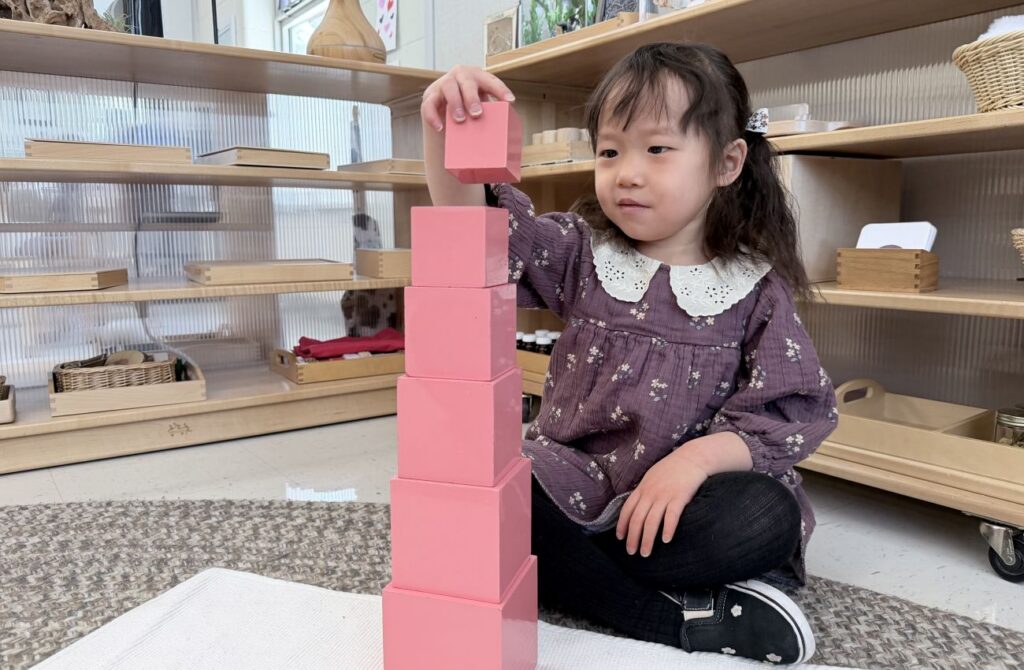
Primary First Year (Age 3-4) at MCHVF
The first year lays the foundation for everything that follows. When your child joins a Montessori classroom, they enter a mixed-age community where learning happens through hands-on exploration rather than rote instruction.
During this explorer year, children:
- Adapt to the prepared environment and discover how to work independently in a mixed-age setting
- Develop essential skills in concentration, sequencing, and language while refining fine motor control
- Build social skills and a sense of community, learning independence and accountability from older role models
One of the most iconic Montessori materials your child will encounter is the Pink Tower—ten graduated pink cubes that stack from largest to smallest. As children like Luna carefully build this tower, they’re not just playing—they’re developing visual discrimination, spatial awareness, hand-eye coordination, and the focused concentration that will serve them throughout their academic career.
A Montessori education focuses on the process rather than the product. Children absorb the rhythms of the classroom, observe older students at work, and begin their own journey of discovery at a pace that feels natural to them.
Learn more about MCHVF’s Primary First Year program.
Year Two: Experimenters Dive Deeper
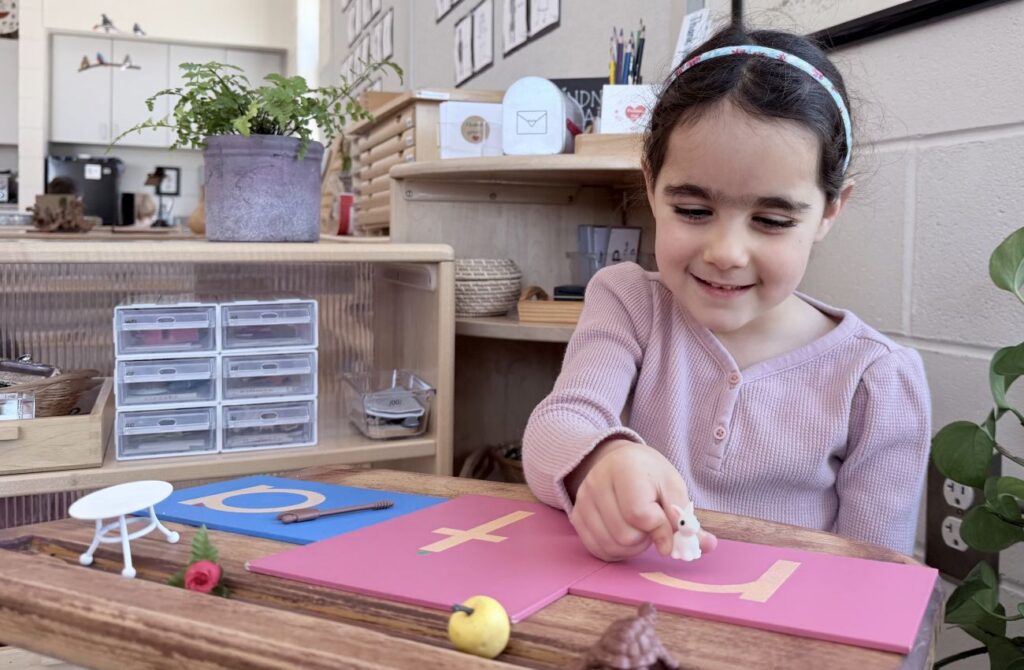
Pre-K Year (Age 4-5)
By the second year, children have transformed. The same classroom that once was new now feels familiar, like an extention of home. Your child knows the routines, understands the expectations, and is ready to tackle more complex work.
During the experimenter year, children:
- Build on foundational skills established in year one, moving from concrete to abstract thinking
- Engage in meaningful work with letter and sound recognition, numerals, and quantities as the writing process begins
- Continue deep exploration across all curriculum areas while preparing for the leadership role they’ll assume the following year
Materials like the Sandpaper Letters come alive during this year. As children like Isabel trace the textured letters with their fingers, they’re building muscle memory for writing while connecting sounds to symbols—a multisensory approach that makes literacy feel natural rather than forced. The work grows more sophisticated as children match objects to letters, building the phonetic foundation they’ll need for reading and writing.
What makes year two so powerful is watching confidence bloom. Children who were once the youngest classroom members now mentor the new first-year students, reinforcing their own learning by teaching others.
Explore MCHVF’s Pre-K program.
Year Three: Experts Lead and Excel
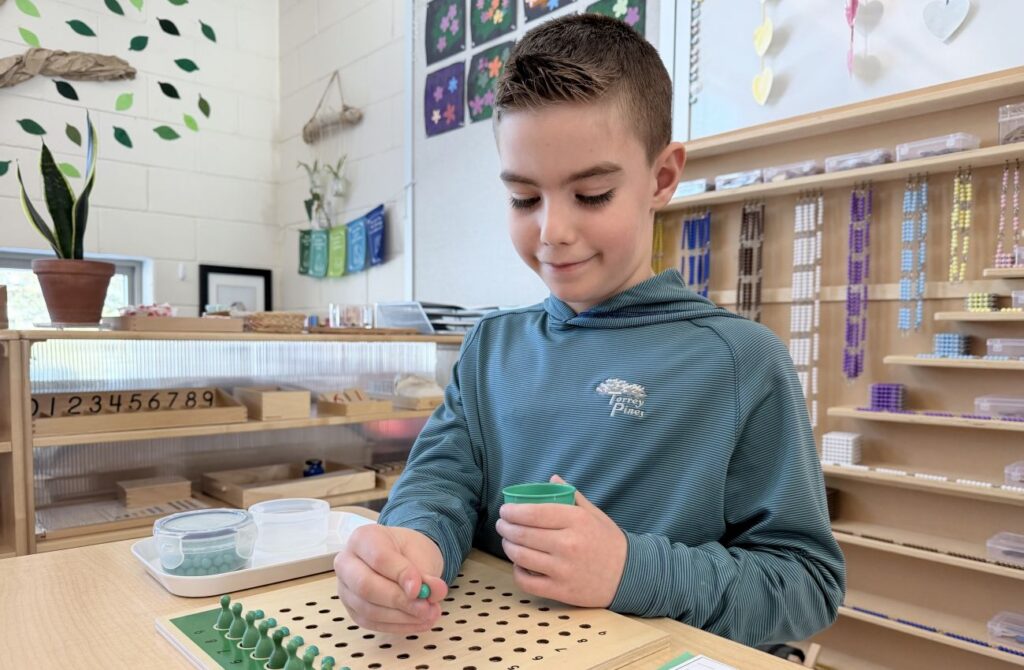
Kindergarten Year (Age 5-6)
This is where everything comes together. After two years of preparation, kindergarten isn’t about catching up—it’s about mastery, leadership, and sophisticated academic work that would surprise many first-grade teachers.
During the expert year, kindergarteners:
- Pursue in-depth challenges that build on the solid foundation established in years one and two
- Solidify skills in reading, writing, and mathematics, often working well beyond traditional kindergarten expectations
- Exhibit confidence as leaders and role models, reinforcing their own learning by teaching younger children
- Develop a love of lifelong learning that prepares them exceptionally well for first grade and beyond
By kindergarten, children tackle abstract mathematical concepts with ease. Materials like the Division Board—which kindergartener Luke uses in the photo—transform abstract division problems into concrete, hands-on experiences. Children physically distribute beads to visualize how numbers divide, discovering concepts like remainders through manipulation rather than memorization.
The true magic of year three is watching children own their education. They choose challenging work independently, persist through difficult problems, and demonstrate the executive function skills that predict long-term academic success. They’ve become leaders who welcome new students, model proper material use, and create a culture of respect and curiosity in the classroom.
Discover MCHFV’s Kindergarten program.
Why the Three-Year Cycle Matters for Main Line Families
For Chester County, Delaware County, and Montgomery County families, the three-year cycle offers something traditional programs can’t: deep relationships with educators who truly know your child, mixed-age communities where every child becomes both student and teacher, and academic preparation that happens naturally. By kindergarten, children return each September not as anxious beginners, but as confident leaders ready to continue their growth.
Experience Montessori in Valley Forge National Historical Park
Montessori Children’s House of Valley Forge brings the time-tested Montessori approach to one of the Main Line’s most beautiful and historic settings. As a member school of the American Montessori Society, MCHVF maintains the highest standards of authentic Montessori education while serving families throughout Chester County, Montgomery County, and the greater Philadelphia region. The school’s state-of-the-art campus offers your child the opportunity to learn in an environment where education honors the whole child—building not just academic skills, but the character, curiosity, and confidence that lead to lifelong success.
If you’re a local parent wondering whether your child is truly ready for kindergarten—or if you’re looking for an educational experience that sets the foundation for future success—visit Montessori Children’s House of Valley Forge to observe a classroom in action, meet their experienced teachers, and discover how the three-year cycle can transform your child’s early education experience.
Photos courtesy of Montessori Children’s House of Valley Forge, as seen in the Spring Education Guide. This story supports the Main Line Parent Community. Collaborate with us.