Childhood Uninterrupted: How Gladwyne Montessori Protects Focus in a Digital Age
Gladwyne Montessori’s intentional approach to technology, coupled with small classroom size, helps children develop deep focus, creativity, and social skills without the distractions of screens

In an era when tablets outnumber textbooks and social media shapes childhood experiences, parents face mounting pressure to introduce technology earlier and earlier. But what if keeping kids “young” longer—protecting them from constant screen exposure—actually prepares them better for the future?
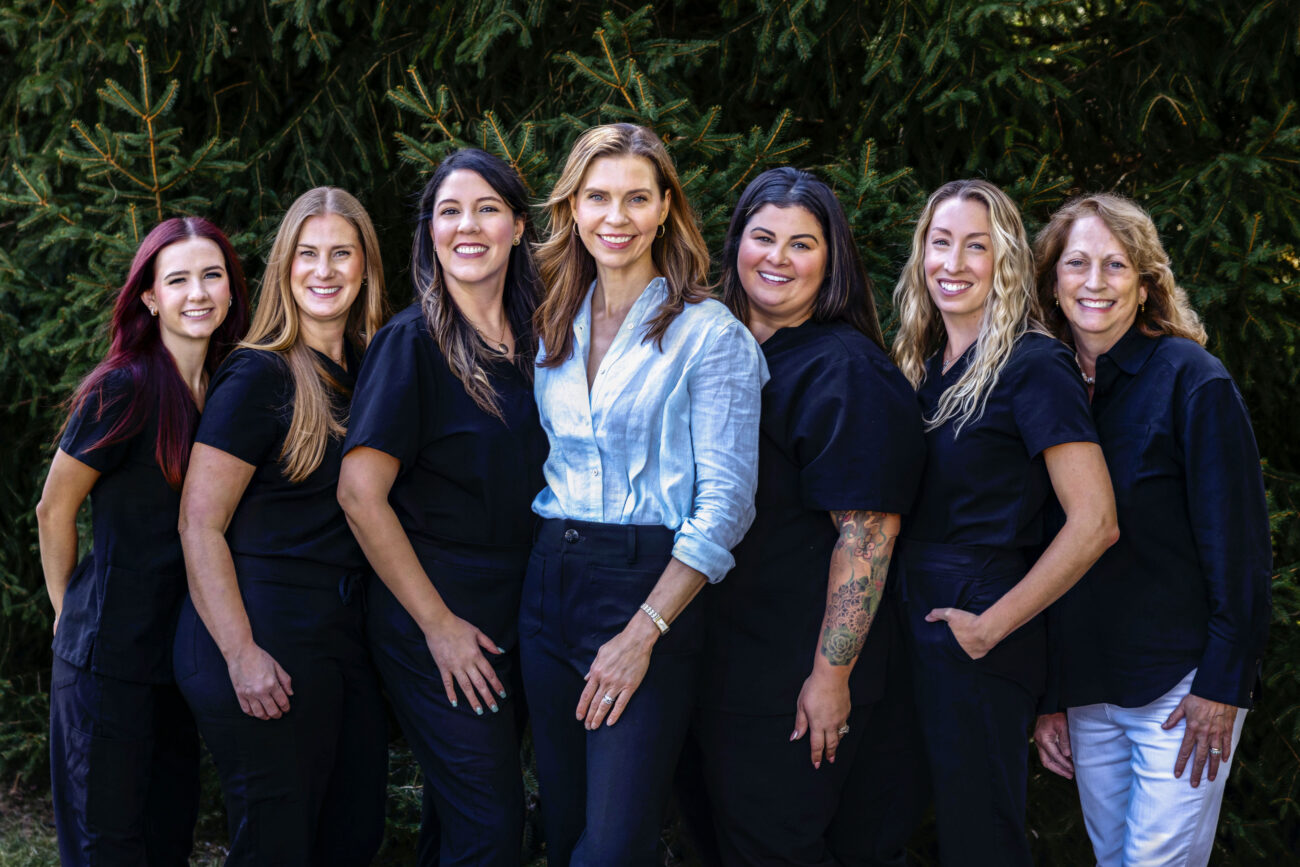
Gladwyne Montessori takes a different path. The AMS-accredited school doesn’t ban technology. Instead, it teaches children to use it purposefully while prioritizing hands-on learning, real-world experiences, and developmental readiness. Main Line Parent spoke with Gwen Shangle, Assistant Head of School, Jody Viereck, Dean of Students & Elementary Program Coordinator, and Dominique Desir, School Counselor to learn more about their intentional use of technology with their students. (Ms. Desir comes to Gladwyne Montessori from Montgomery County Intermediate Unit (MCIU)).
“We don’t consider ourselves ‘low tech,'” explains Gwen Shangle, who leads the school’s approach to childhood development. “We intentionally teach technology. Chromebooks are used for focused tasks like Google apps. It’s not a major part of their day.”
Developmental Stages Drive the Approach
Gladwyne Montessori grounds its philosophy in Maria Montessori’s concept of developmental stages. The school structures its program around what children naturally need at each age rather than what technology can deliver.
The school utilizes multi-age classrooms with three-year spans. This structure allows children to progress at their own pace and creates a familial community where teachers build strong relationships with students over multiple years.
“Our multi-age classrooms foster social-emotional development in ways that single-grade classrooms simply can’t,” Shangle notes. “Teachers know their students deeply, and children develop authentic relationships across age groups.”
This year, the elementary program extends this community-building across the entire elementary building, creating connections that reach beyond individual classrooms. Including being purposeful in creating building-wide rules for their classroom charter and using common language for positive reinforcement and redirection. All adults are on the same page and seen as equals in the building.

Hands-On Materials Over Screens
Walk into a Gladwyne Montessori elementary classroom and you’ll notice what’s absent: the glow of screens. While Smartboards and Chromebooks exist in the building, teachers use them sparingly and with clear purpose.
The school focuses on hands-on materials and real-world examples instead. Shangle explains that this approach minimizes screen time in early elementary years when children’s brains benefit most from tactile, concrete experiences.
“While other schools might use apps for math practice, our students work with physical manipulatives,” Shangle says. “They touch, move, and arrange materials. This concrete experience builds deeper understanding than any app can provide.”
Even when technology appears in the classroom, teachers use it intentionally. Chromebooks serve as tools for benchmark testing in kindergarten, but always in supervised, interactive settings. 3rd-5th graders will have a special class that teaches digital literacy first, using the school’s Acceptable Use Policy (AUP) and AI policy as guidelines. Teachers also work on how to keyboard correctly, learn about safety on the internet, using popular apps, and using the technology to incorporate cross curricular projects. One of these projects is called Book Talks, where students present a Google Slideshow presentation on a favorite book and must incorporate technology and literacy skills to complete the project. It is then presented and parents are invited to attend the presentation online. 5th graders will present to 3rd graders and vice versa.
Teaching Digital Citizenship Without Digital Dependence
Parents often worry: Will my child fall behind without constant technology exposure?
Viereck offers reassurance, “Technology is ubiquitous. Children adapt to new tools incredibly quickly.”
The school teaches digital citizenship and safety because children encounter technology outside school walls. But Gladwyne Montessori believes children don’t need hours of daily screen time to develop tech fluency.
“We’re preparing them to use technology as a tool, not to be dependent on it for entertainment or learning,” Viereck explains.
Parents choose Gladwyne Montessori for its authentic Montessori approach, where deep, hands-on learning leads the way, and technology plays a thoughtful supporting role. These parents share similar values and often already limit screen time at home, creating a supportive community around these choices. Teachers are also mindful of how they present lessons and use the Smartboards for unique lessons. Screentime is thoughtfully used by teachers and students.

Creating Environments That Foster Focus
Gladwyne Montessori maintains what Maria Montessori called the “absorbent mind” through carefully designed classroom environments. Teachers create low-sensory spaces with muted colors, natural materials, and uncluttered, organized layouts.
“Every item in the classroom has a purpose,” Shangle explains. “We only introduce new materials when a child is ready to use them. This fosters a sense of order and concentration.”
The school even teaches the “silence game”—a form of meditation that helps children develop focus and inner calm. This practice stands in stark contrast to the constant stimulation that screens provide.
The physical environment supports deep concentration. Students enjoy 180 minutes of uninterrupted morning work time, allowing them to enter flow states that build independence and purpose.
Social-Emotional Growth Through Real Interaction
“Cell phones brought to school must be turned off and kept in backpacks,” Shangle notes. “But more importantly, our environment promotes communication and conflict resolution through freedom of movement and peer interaction.”
This approach differs dramatically from settings where children sit quietly, isolated with screens. Gladwyne Montessori students move freely, interact with peers across age groups, and practice real-world social skills.
“Unlike the quiet, isolated screen time often seen in other settings, students at Gladwyne Montessori are talking, collaborating, and working through conflicts face-to-face,” Desir says.
Gladwyne Montessori doesn’t require parents to sign contracts about cell phone or social media usage outside of school. Outside of school, Gladwyne Montessori doesn’t have any rules about how their students use screen time. Instead, the school fosters a community where parents discuss common values naturally. All parents and students consent to an Acceptable Use Policy and AI Policy, and the teachers focus on proper and ethical use of technology.

Preparing Students for Middle School Transitions
Some parents wonder whether the lower level of tech usage will leave students unprepared for traditional school environments. Gladwyne Montessori’s track record suggests otherwise.
The school offers an “exmissions” program for sixth graders. This comprehensive support includes parent guidance, mock interviews, and recommendation letters to help students enter their chosen middle schools.
Fourth graders can join a club that prepares them for entrance exams. By sixth grade, students receive structured support for the transition ahead.
“Students may experience some adjustments,” Shangle acknowledges. “But they typically thrive because they’ve developed the ability to advocate for themselves. They have a strong sense of identity, which helps them resist peer pressure.”
The school’s approach builds internal resilience rather than external conformity. Students learn to think independently, focus deeply, and engage authentically with others—skills that serve them well beyond elementary school.
A Community of Like-Minded Families
Gladwyne Montessori attracts families who value childhood for what it is rather than rushing toward what comes next. Parents appreciate the school’s 7:1 student-to-teacher ratio, which allows for individualized attention and genuine relationships.
The school’s 5 acres of outdoor learning spaces provide another antidote to screen culture. Children explore nature, discover through play, and experience learning that engages all their senses.
With 100% certified Montessori lead teachers and over 60 years of experience, Gladwyne Montessori has refined its approach to childhood development. The school serves 230+ students from infancy through sixth grade, creating a continuous educational journey grounded in developmental readiness.

The Benefits of Being “Young”
In protecting childhood from premature exposure to social media, excessive screen time, and digital distractions, Gladwyne Montessori gives children something invaluable: the space to develop at their own pace.
Children build concentration without constant interruption. They develop creativity through hands-on exploration. They form authentic relationships through real interaction. And they learn that boredom isn’t something to fear but an invitation to imagination.
“We’re not preparing children for a world that exists today,” Shangle reflects. “We’re preparing them to create the world of tomorrow. That requires deep thinking, genuine connection, and the confidence to be themselves—skills that screens can’t teach.”
For Main Line families seeking (something like) an elementary program that provides deep learning, and a foundation for the future, Gladwyne Montessori offers a time-tested approach grounded in developmental science and decades of experience. Here, children don’t miss out by being “young.” They gain exactly what they need to thrive.
Gladwyne Montessori is located in Gladwyne, PA. For more information about their programs from infant through sixth grade, visit gladwyne.org.
Gladwyne Montessori School’s story supports the Main Line Parent Community’s Education Guide. Collaborate with us.